
描述
Technical Specifications:
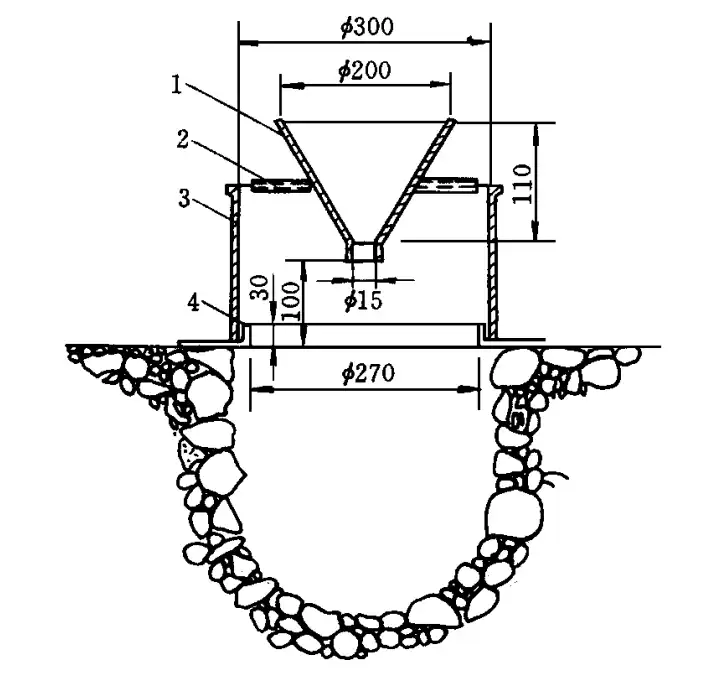
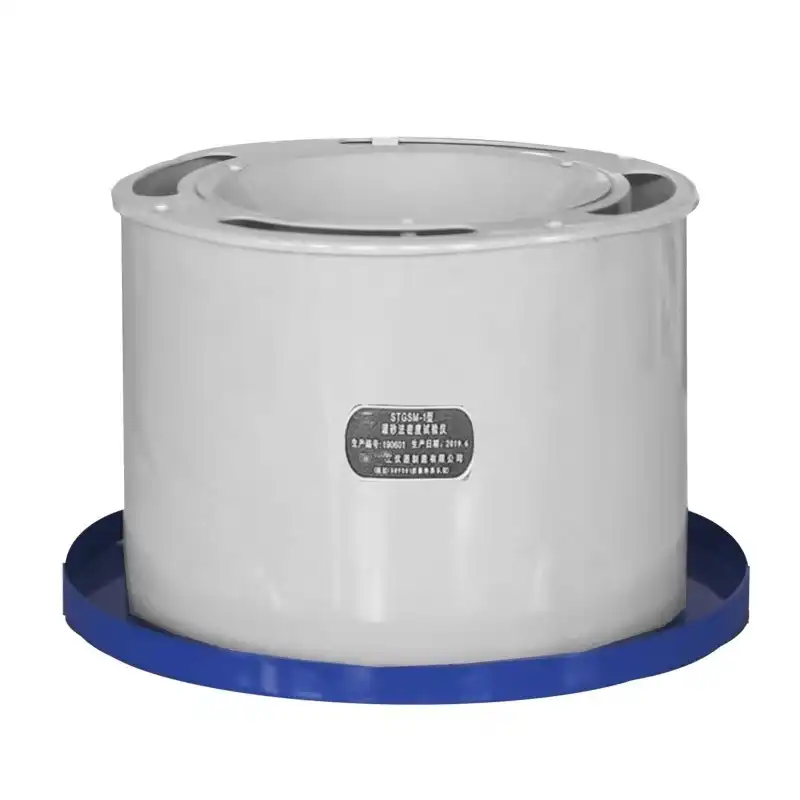
The diameter of the upper opening of the funnel should be 200mm, the diameter of the lower opening should be 15mm, and the height should be 110mm.
The diameter of the windproof tube should be 300mm and the height should be 220mm.
The diameter of the measuring cylinder should be 150mm to 270mm and the height should be 200mm to 330mm.
Test Method:
Sand filling density testing instrument, including funnel, funnel stand, wind-proof cylinder, ring, and equipped with 3 fixers.
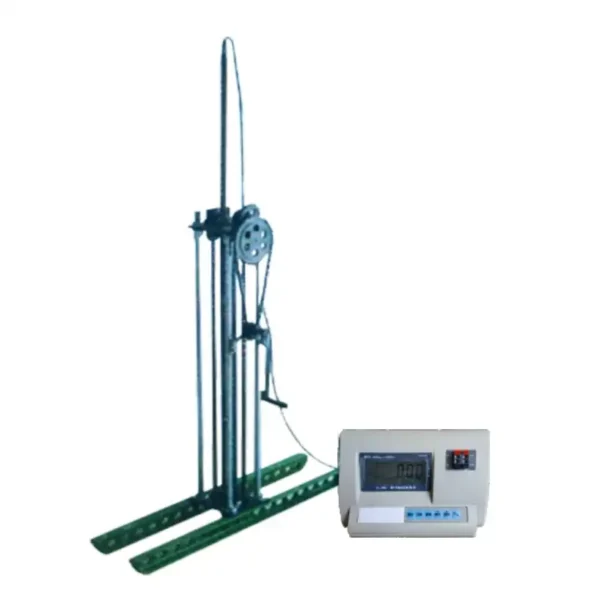
Platform scale: capable of weighing 10kg with a division value of 5g; capable of weighing 50kg with a division value of 10g.
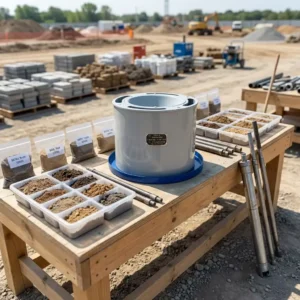
Sand for measurement: standard sand with a particle size of 0.25 – 0.5mm, dry and clean, 10 – 40kg.
Other: sand measuring container (with lid), ruler, shovel tools, etc.
Calibration and calibration of the instrument equipment
Platform scale: should be calibrated in accordance with the corresponding calibration procedures.
Sand: should be prepared in accordance with the requirements of this procedure “Appendix A” and its density should be calibrated.
Operation steps (using ring)
A ground area of approximately 40cm × 40cm should be leveled. When checking the compacted density of the filling material, the uncompacted soil layer on the surface should be removed, and a part of the compacted soil layer should be scraped away (the depth depends on the requirements) to make the bottom of the test pit reach the specified depth.
Add the sand for measurement to the container on the platform scale. According to Figure 2.1.1, place the instrument on the leveled ground, fix the ring with the fixers. Open the valve of the funnel, let the sand pass through the funnel and fill the ring. When the ring is filled, remove the funnel, funnel stand and wind-proof cylinder (if there is no wind, no need for the wind-proof cylinder), use a ruler to level the sand surface on the ring, making it flush with the edge of the ring. Carefully pour the scraped sand back into the sand container, do not lose any. Weigh the sand container plus the remaining sand mass from the first measurement.
Remove the sand from the ring, weigh it, and pour it back into the sand container. A small part of the sand in the ring is allowed to remain inside.